UTILIZATION OF POWERPOINT MEDIA TO IMPROVE STUDENT LEARNING OUTCOMES
DOI:
https://doi.org/10.37478/mahajana.v7i1.7611Abstract
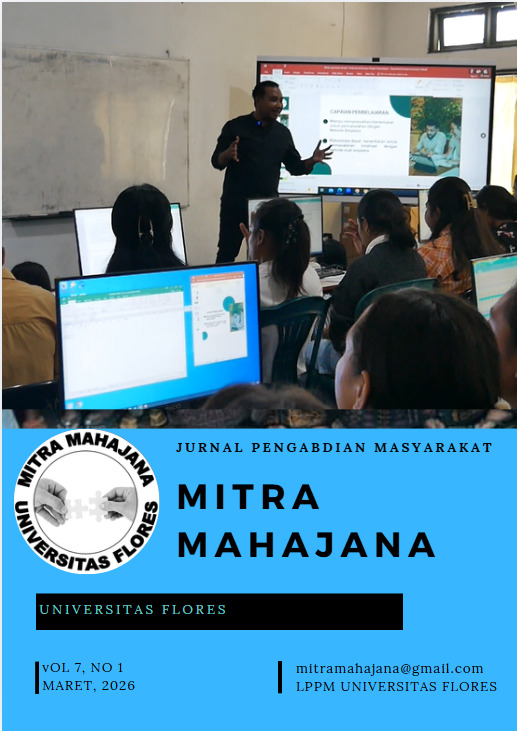
This community service aims to improve students’ learning outcomes using technology-based learning media, particularly interactive Microsoft PowerPoint, in Biology learning for twelfth-grade students at SMA Adhyaksa Ende. The study was motivated by low student achievement caused by the dominance of teacher-centred lecture methods. The implementation method consisted of preparation and instructional stages. The preparation stage included lesson plan development, curriculum-based material design, and training in the use of technology for creating interactive PowerPoint media. The implementation stage involved presenting cell division material using slides containing text, images, videos, animations, and interactive quizzes. The results indicated an improvement in students’ understanding, as reflected in their ability to restate the material and their increased accuracy in answering evaluation questions. These findings are consistent with previous studies highlighting the effectiveness of interactive PowerPoint in enhancing student engagement and learning outcomes. Therefore, systematically and attractively designed PowerPoint media can serve as an innovative alternative to improve the quality of classroom instruction.
Downloads
Keywords:
powerpoint media, student learning outcomesReferences
Agustian, H. Y., Finne, L. T., Jørgensen, J. T., Pedersen, M. I., Christiansen, F. V., Gammelgaard, B., & Nielsen, J. A. (2022). Learning outcomes of university chemistry teaching in laboratories: A systematic review of empirical literature. Review of Education, 10(2), e3360. https://doi.org/10.1002/rev3.3360
Agustini, R., Meilanie, R. S. M., & Pujiastuti, S. I. (2024). Enhancing critical thinking and curiosity in early childhood through inquiry-based science learning. Aulad: Journal on Early Childhood, 7(3), 734-743. DOI: https://doi.org/10.31004/aulad.v7i3.780
Akmaliyah, A., & Hidayat, H. (2022). Developing Online Learning Based Lesson Plan for Teaching Speaking in 21st Century. Foreign Language Instruction Probe, 1(2), 140-150. DOI: https://doi.org/10.54213/flip.v1i2.173
Aifan, H. (2022). Implementing a project-based collaborative learning approach using PowerPoint to improve students’ 21st-century skills. E-Learning and Digital Media, 19(3), 258-273. https://doi.org/10.1177/20427530211030642
Andini, D., Harahap, H. S., & Machrizal, R. (2024). Powering Up Learning: How Interactive PowerPoint Transforms Student Engagement and Outcomes in Biology. Utamax: Journal of Ultimate Research and Trends in Education, 6(1), 23-32. DOI: https://doi.org/10.31849/utamax.v6i1.18588
Chisunum, J. I., & Nwadiokwu, C. (2024). Enhancing student engagement through practical production and utilization of instructional materials in an educational technology class: A multifaceted approach. NIU Journal of Educational Research, 10(2), 81-89. DOI: https://doi.org/10.58709/niujed.v10i2.2002
Cossa, E., Holtman, L., Ogunniyi, M., & Mikalsen, O. (2008). Assessing students' understanding of cell division in an undergraduate biology course: a qualitative perspective. African Journal of Research in Mathematics, Science and Technology Education, 12(2), 17-30. https://hdl.handle.net/10520/EJC92686
Das, S., Malik, A., Tripathy, S. K., & Sahoo, M. (2025). How to Improve the Quality of PowerPoint Presentation to Achieve Maximum Learning. Research and Reviews in Pediatrics, 26(2), 31-36. DOI: 10.4103/rrp.rrp_10_24
Desyandri, D., Yeni, I., Mansurdin, M., & Dilfa, A. H. (2021). Digital Student Songbook as Supporting Thematic Teaching Material in Elementary School. Jurnal Ilmiah Sekolah Dasar, 5(2), 342–350. https://doi.org/10.23887/jisd.v5i2.36952
Dewi, N. L. P. S., & Manuaba, I. B. S. (2021). Pengembangan Media Pembelajaran Powerpoint Interaktif Pada Mata Pelajaran IPA Siswa Kelas VI SD. Jurnal Penelitian Dan Pengembangan Pendidikan, 5(1), 76–83. DOI: https://doi.org/https://doi.org/10.23887/jppp.v5i1.3276
Eshkobilova, O., & Aziza, B. (2025). ENCOURAGING STUDENT PARTICIPATION IN EVERY LESSON. Modern education and development, 37(2), 301-303. https://journalss.org/index.php/mod/article/view/4763
Fatwa, M. F. M. A., Patta, A. R., & Putra, K. P. (2025). Efektifitas Pembelajaran Berbasis Multimedia Interaktif Dengan Prinsip Mayer Terhadap Hasil Belajar Menggunakan Aplikasi Autoplay Media Studio. Journal of Computers, Informatics, and Vocational Education, 2(1), 1-9. https://journal.unm.ac.id/index.php/CIVE/article/view/6540
Fufa, F. S., Tulu, A. H., & Ensene, K. A. (2023). Examining the challenges of using student-centred teaching strategies in secondary schools: A qualitative approach. Journal of Pedagogical Sociology and Psychology, 5(3), 61-72. https://doi.org/10.33902/jpsp.202323181
Gunawan, G., Yanti, P. R., & Nelson, N. (2023). Methods for achieving cognitive, affective, and psychomotor aspects in Islamic religious education learning: a study at senior high school in Rejang Lebong. Al-Ishlah: Jurnal Pendidikan, 15(1), 981-991. DOI: https://doi.org/10.35445/alishlah.v15i1.2793
Hilman, C., Rohmah, S., & Syarifah, M. (2025). Techniques for selecting learning media in Madrasah Ibtidaiyah educational institutions. Digital Theory, Culture & Society, 3(1), 1-7. DOI: https://doi.org/10.61126/dtcs.v3i1.46
Indra, M. H., Sutarto, S., Kharizmi, M., Nurmiati, A. S., & Susanto, A. (2023). Optimizing the Potential of Technology-Based Learning Increases Student Engagement. Al-Fikrah: Jurnal Manajemen Pendidikan, 11(2), 233-244. DOI: https://doi.org/10.31958/jaf.v11i2.10554
Kalyani, L. K. (2024). The role of technology in education: Enhancing learning outcomes and 21st century skills. International journal of scientific research in modern science and technology, 3(4), 05-10. DOI: https://doi.org/10.59828/ijsrmst.v3i4.199
Kavadella, A., Da Silva, M. A. D., Kaklamanos, E. G., Stamatopoulos, V., & Giannakopoulos, K. (2024). Evaluation of ChatGPT’s real-life implementation in undergraduate dental education: mixed methods study. JMIR Medical Education, 10(1), e51344. doi:10.2196/51344
Lin, J. W., Yen, M. H., Liang, J., Chiu, M. H., & Guo, C. J. (2016). Examining the factors that influence students’ science learning processes and their learning outcomes: 30 years of conceptual change research. Eurasia Journal of Mathematics, Science and Technology Education, 12(9), 2617-2646. https://doi.org/10.12973/eurasia.2016.000600a
Liu, W., & Wang, Y. (2024). The effects of using AI tools on critical thinking in English literature classes among EFL learners: An intervention study. European Journal of Education, 59(4), e12804. https://doi.org/10.1111/ejed.12804
Lu, B., & Hanim, R. N. (2024). Enhancing Learning Experiences through Interactive Visual Communication Design in Online Education. Eurasian Journal of Educational Research (EJER), (109). DOI. 10.14689/ejer.2024.109.009
Lubis, L. H., Febriani, B., Yana, R. F., Azhar, A., & Darajat, M. (2023). The use of learning media and its effect on improving the quality of student learning outcomes. International Journal Of Education, Social Studies, And Management (IJESSM), 3(2), 7-14. DOI: https://doi.org/10.52121/ijessm.v3i2.148
Mabidi, N. I. (2025). From traditional to digital: Transforming education through communication media in the 21st century. South African Journal of Education, 45(4), 1-11. https://journals.co.za/doi/epdf/10.15700/saje.v45n4a2697
Mardiana, E., Kusuma, Z. N. A. W., & Iskandar, S. (2024). Karakteristik dan peran guru sebagai fasilitator pembelajaran abad 21 di sekolah dasar. Pendas: Jurnal Ilmiah Pendidikan Dasar, 9(4), 247-256. DOI: https://doi.org/10.23969/jp.v9i4.20988
Mnguni, L., & Moyo, D. (2021). An assessment of the impact of an animation on biology students’ visualization skills related to basic concepts of mitosis. Eurasia Journal of Mathematics, Science and Technology Education, 17(8), em1997. https://doi.org/10.29333/ejmste/11116
Muhja, A. N. A., & Rosdiana, R. (2026). The Role Of Interactive Powerpoint In Student Participation. Golden Ratio of Data in Summary, 6(1), 26-32. https://doi.org/10.52970/grdis.v6i1.2013
Muir, T., Wang, I., Trimble, A., Mainsbridge, C., & Douglas, T. (2022). Using interactive online pedagogical approaches to promote student engagement. Education Sciences, 12(6), 415. https://doi.org/10.3390/educsci12060415
Nieves, L. H., De La Hoz Vargas, V., Roncallo, E. C., & Gutiérrez, A. H. (2024). Making written texts for learning more accessible with easy-to-read and universal design. South African Journal of Education, 44(1), 1-10. https://hdl.handle.net/10520/ejc-educat_v44_n1_a1
Pambudi, S., Rezkita, S., & Purwaningsih, E. (2021). Upaya Meningkatkan Kedisiplinan Dan Hasil Belajar Matematika Siswa Melalui Penggunaan Media Power Point Interaktif. Jurnal Ilmiah Profesi Guru (JIPG), 02(02), 1–9. DOI: https://doi.org/https://doi.org/10.30738/.v2i2.11312
Paramole, O. C., Adeoye, M. A., Arowosaye, S. A., & Ibikunle, Y. A. (2024). The impact of active listening on student engagement and learning outcomes in educational settings. International Journal of Universal Education, 2(2), 77-89. https://journal.umpr.ac.id/index.php/ijue/article/view/8898
Parette, H. P., Blum, C., Boeckmann, N. M., & Watts, E. H. (2009). Teaching word recognition to young children who are at risk using Microsoft® PowerPoint™ coupled with direct instruction. Early Childhood Education Journal, 36(5), 393-401. https://doi.org/10.1007/s10643-008-0300-1
Prykhodkina, N., Tsynova, M., Kravets, H., ?rechanovska, O., & Nichyshyna, V. (2025). The role of interactive technologies in improving the quality of learning and development of scientific competences in modern education. Periodicals of Engineering and Natural Sciences, 13(1), 69-82. DOI: https://doi.org/10.21533/pen.v13.i1.253
Puspitasari, R. (2025). Student Learning Styles in Science Learning and Their Influence on Concept Understanding. Scientica Education Journal, 2(3), 30-38. DOI: https://doi.org/10.62872/sej.v2i3.309
Putri, H. P., & Nurafni, N. (2021). Pengaruh Media Pembelajaran PowerPoint Interaktif terhadap Hasil Belajar IPS Siswa Sekolah Dasar. Edukatif?: Jurnal Ilmu Pendidikan, 3(6), 3538–3543. DOI: https://doi.org/10.31004/edukatif.v3i6.986
Rahmani, R. A., & Abduh, M. (2022). Efektivitas Media PowerPoint Interaktif Terhadap Motivasi dan Hasil Belajar Kognitif Masa Pandemi. Jurnal Basicedu, 6(2), 2456–2465. DOI: https://doi.org/10.31004/basicedu.v6i2.2378
Rosnaeni, R. (2021). Karakteristik dan asesmen pembelajaran abad 21. Jurnal Basicedu, 5(5), 4334-4339. DOI: 10.31004/basicedu.v5i5.1548
Ruado, L. F., & Cortez, L. A. S. (2024). Enhancing student engagement and achievement in biology through interactive slide presentations. American Journal of Education and Technology, 3(1), 51-59. https://doi.org/10.54536/ajet.v3i1.2520
Sargent, J., & Casey, A. (2020). Flipped learning, pedagogy and digital technology: Establishing consistent practice to optimise lesson time. European physical education review, 26(1), 70-84. https://doi.org/10.1177/1356336X19826603
Setiawan, A., Nugroho, W., & Widyaningtyas, D. (2023). Development of interactive powerpoint learning media based on information and communication technologies to improve student learning outcomes. Jurnal Pendidikan Dasar Nusantara, 9(1), 75-86. DOI: https://doi.org/10.29407/jpdn.v9i1.20056
Shermukhammadov, B. (2022). Creativity of a Teacher in an Innovative Educational Environment. Journal of Higher Education Theory and Practice, 22(12), 126-132. DOI. 10.33423/jhetp.v22i12.5468
Stevani, F., & Sucahyo, I. (2022). Development of Android-Based Learning Media Using Microsoft Powerpoint Integrated Ispring Suite on Class X's Work and Energy Materials. Prisma Sains: Jurnal Pengkajian Ilmu Dan Pembelajaran Matematika Dan IPA IKIP Mataram, 10(3), 688-699. DOI: https://doi.org/10.33394/j-ps.v10i3.5422
Susilowati, W., Harsan, T., Hadiprasetyo, K., Veteran, U., Nusantara, B., Veteran, U., Nusantara, B., Veteran, U., & Nusantara, B. (2021). Peningkatan Kemampuan Berfikir Kritis Dan Hasil Belajar Ips Melalui Media Powerpoint Interaktif. Jurnal Dikdas Bantara, 4(2), 138–149. DOI: https://doi.org/https://doi.org/10.32585/dikdasbantara.v4i2.1685
Tafonao, T. (2018). Peranan Media Pembelajaran Dalam Meningkatkan Minat Belajar Mahasiswa. Jurnal Komunikasi Pendidikan, 2(2), 103. https://doi.org/10.32585/jkp.v2i2.113
Utaminingsih, S., Machfud, S., & Kassymova, G. K. (2024). Development of learning management with animated video to increase motivation and learning outcomes. Journal of Advanced Research in Applied Sciences and Engineering Technology, 41(2), 31-42. https://doi.org/10.37934/araset.41.2.3142
Wu, D., Zhang, S., Ma, Z., Yue, X. G., & Dong, R. K. (2024). Unlocking potential: Key factors shaping undergraduate self-directed learning in AI-enhanced educational environments. Systems, 12(9), 332. https://doi.org/10.3390/systems12090332
Zaenatun, A., Setiani, A. A., Farrah, R., Widyastuti, R., & Aeni, A. N. (2021). Pengaruh Pembelajaran Terpadu Terhadap Hasil Belajar Siswa di Sekolah Dasar. Jurnal Inovasi Pendidikan Dan Pembelajaran Sekolah Dasar, 5(2), 183. DOI: https://doi.org/10.24036/jippsd.v5i2.11517
Zhao, L., Zhao, B., & Li, C. (2023). Alignment analysis of teaching–learning-assessment within the classroom: how teachers implement project-based learning under the curriculum standards. Disciplinary and Interdisciplinary Science Education Research, 5(1), 13. https://doi.org/10.1186/s43031-023-00078-1
Downloads
Published
How to Cite
Issue
Section
License
Copyright (c) 2026 Listini Ndari, Beldiana Teofani Ndore, Ainun Jariyah, Veronika P. S. M. Wae, Yosephina Payu Wao, Jumilah Gago

This work is licensed under a Creative Commons Attribution-ShareAlike 4.0 International License.
The authors and other parties are bound to the Attribution-ShareAlike 4.0 International license (CC BY-SA 4.0 DEED) for the published articles. This permits users to:
Share — copy and redistribute the material in any medium or format for any purpose, even commercially.
Adapt — remix, transform, and build upon the material for any purpose, even commercially.
The licensor cannot revoke these freedoms as long as you follow the license terms.
Under the following terms:
Attribution — You must give appropriate credit , provide a link to the license, and indicate if changes were made . You may do so in any reasonable manner, but not in any way that suggests the licensor endorses you or your use.
ShareAlike — If you remix, transform, or build upon the material, you must distribute your contributions under the same license as the original.
No additional restrictions — You may not apply legal terms or technological measures that legally restrict others from doing anything the license permits.